#SoftwareArchitecture

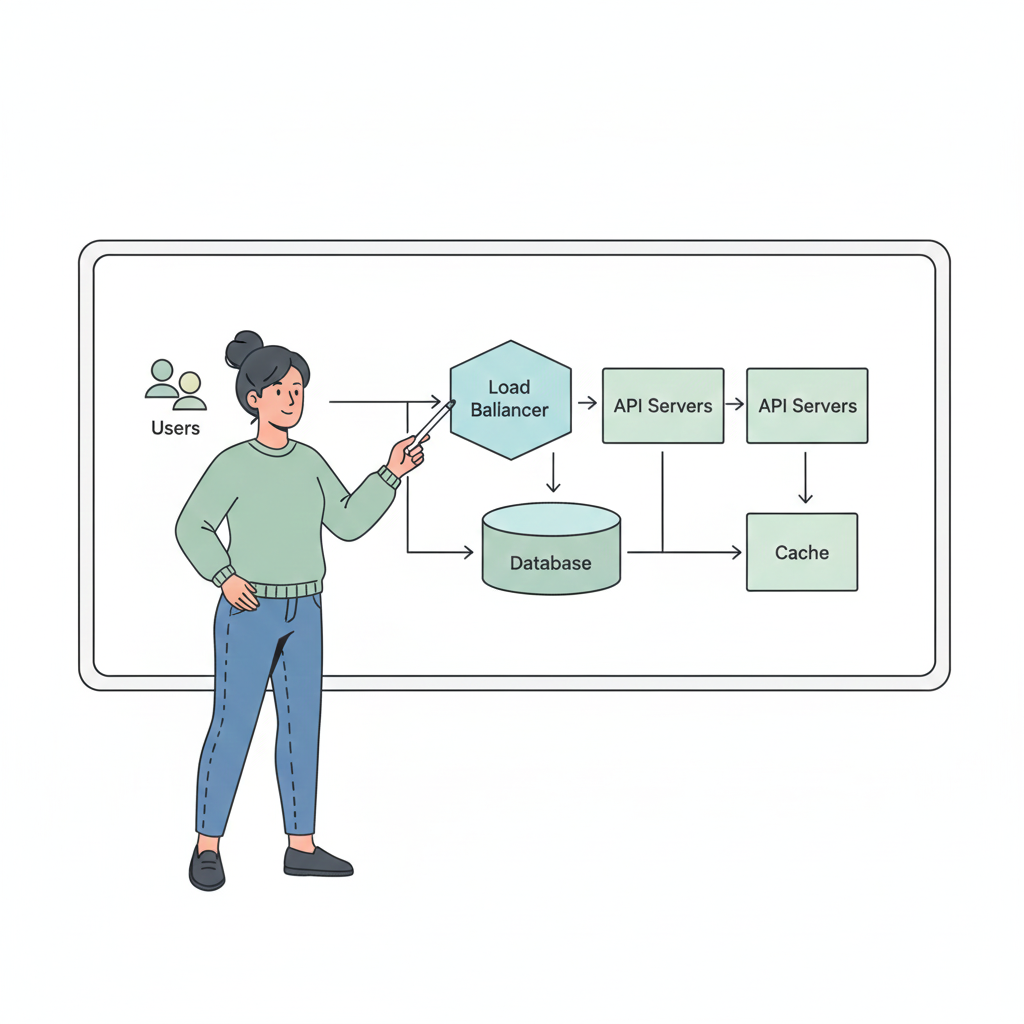
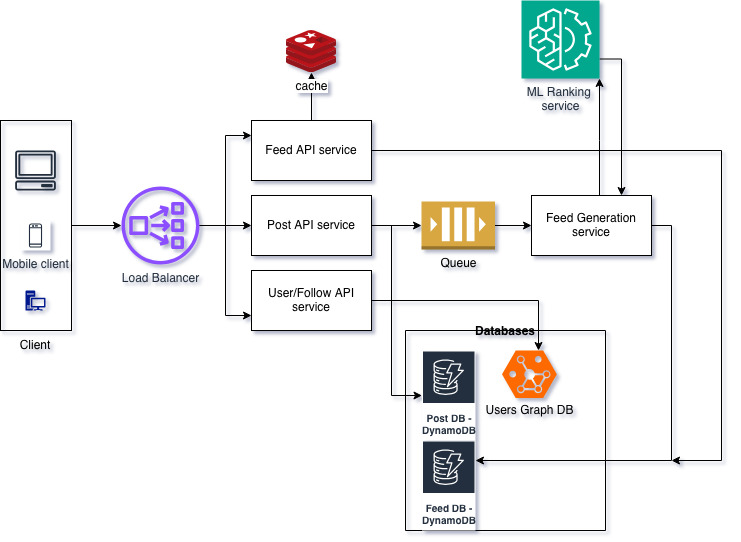
Design a scalable (News Feed) Social Media Feed system

Design a News Feed / Social Media Feed System A News Feed system is the backbone of every modern social platform—Facebook, Instagram, Twitter/X, LinkedIn. It decides what content a user sees, in what order, and how fast. From a system design perspective, this is one of the hardest problems because it combines massive scale, low […]

Design a scalable (News Feed) Social Media Feed system Read More »
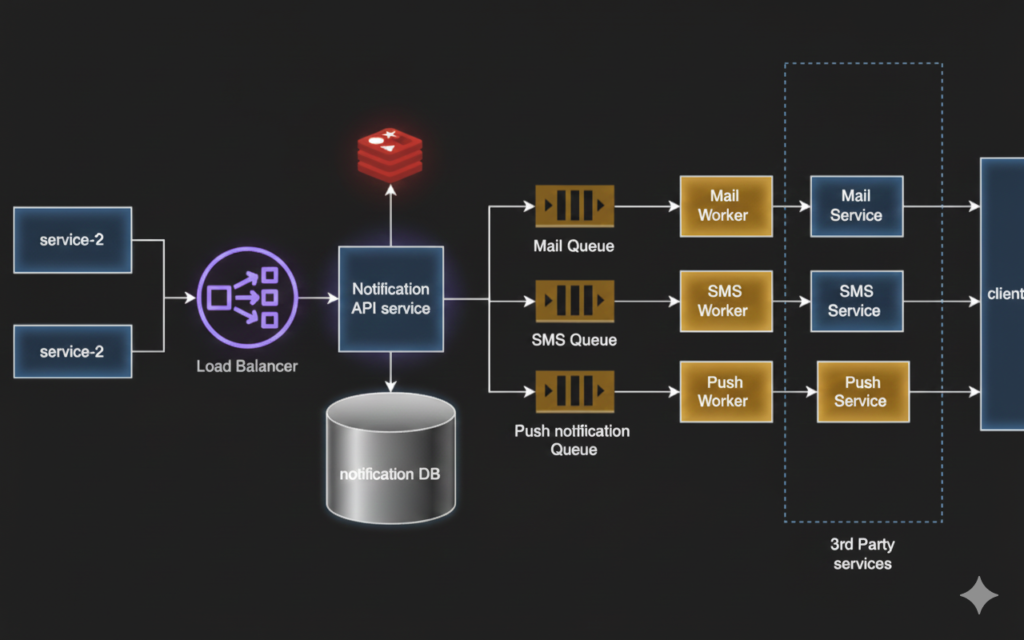
Designing a Scalable Notification System

Notification systems are a critical infrastructure component for modern applications. Whether it is an OTP SMS, an order confirmation email, a push notification for a social update, or an internal system alert, notifications form the bridge between backend systems and end users. At small scale, sending notifications may appear trivial. However, at scale—where millions of

Designing a Scalable Notification System Read More »

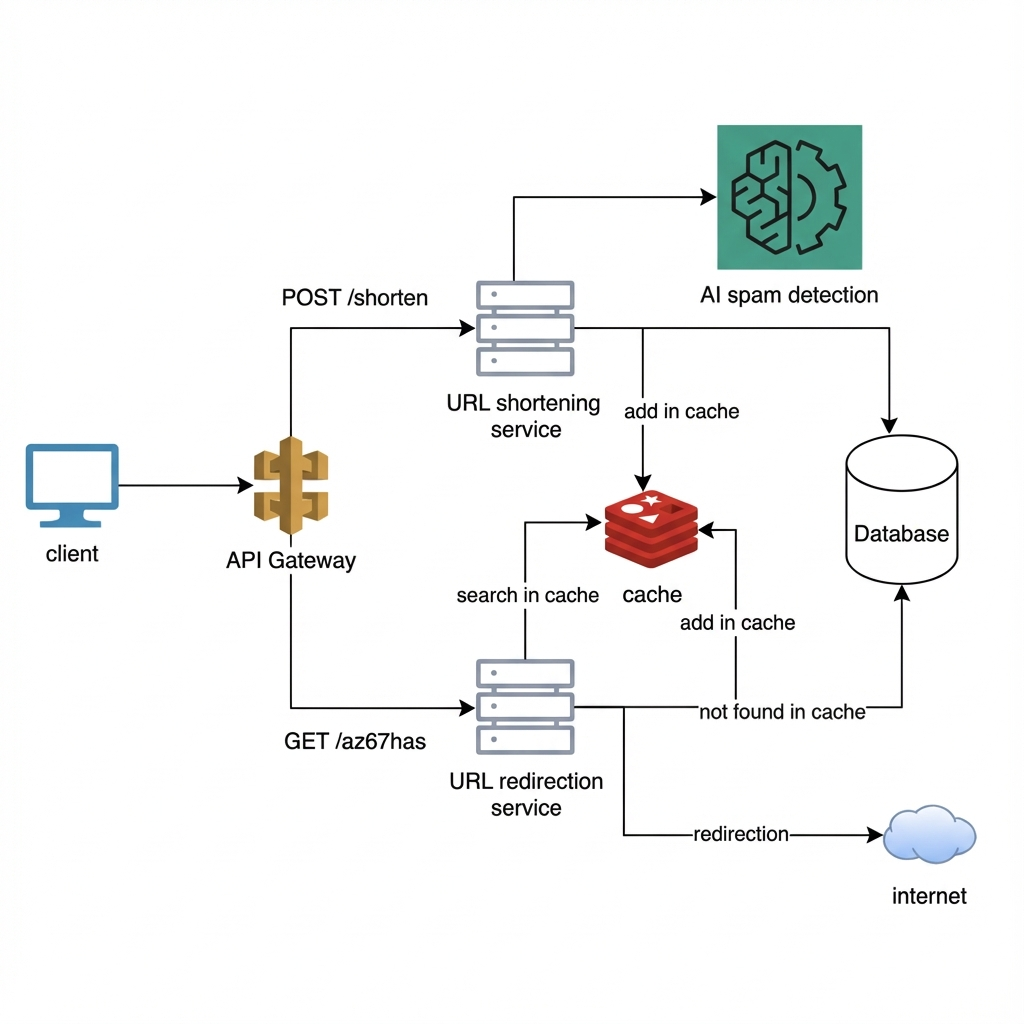
Designing a Scalable URL Shortener (TinyURL)

Designing a URL shortener looks simple on the surface—but at scale, it becomes a classic distributed systems problem involving performance, scalability, caching, databases, and trade-offs. In this post, we will design a production-grade URL shortener using a clear 14-step system design framework that you can reuse for any system design interview or real-world architecture discussion.

Designing a Scalable URL Shortener (TinyURL) Read More »

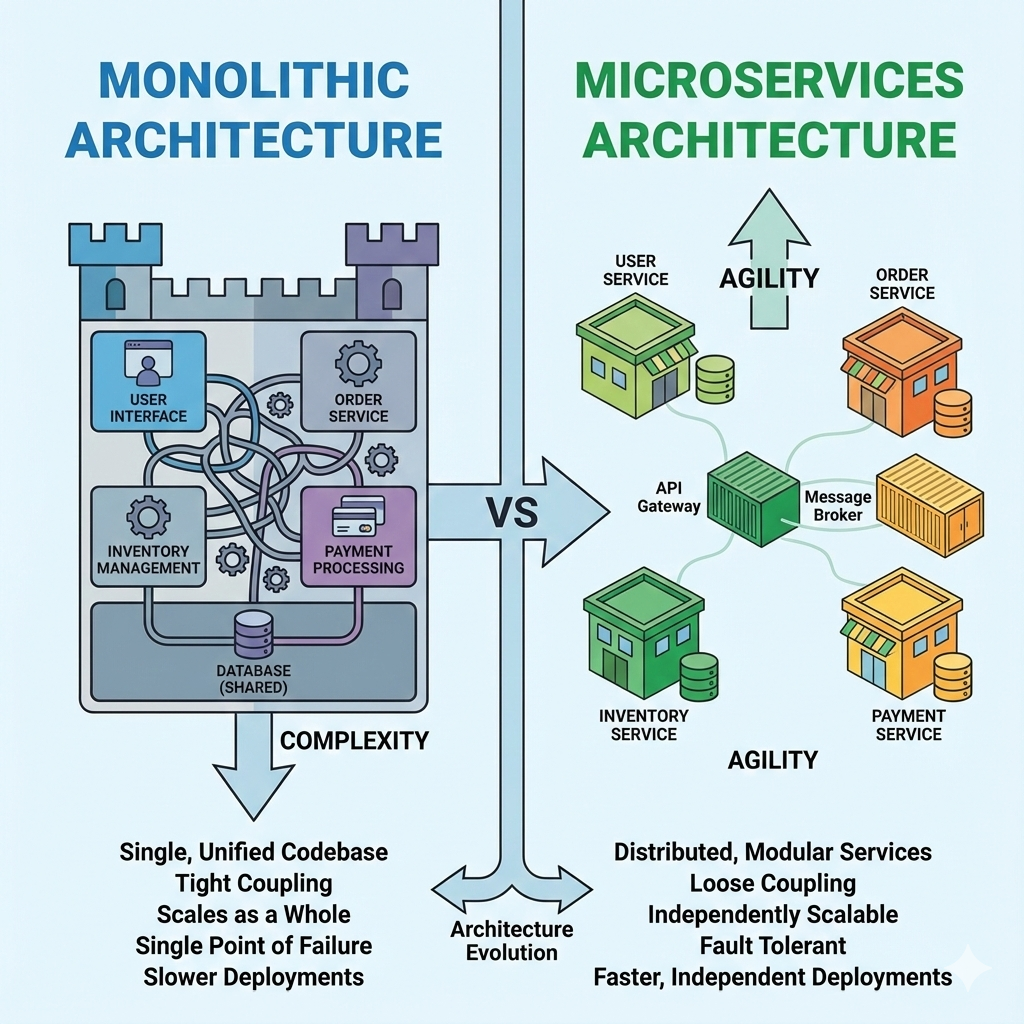
Microservices vs Monolith

Choosing the right architecture is one of the most important decisions in system design.Two common approaches are monolithic architecture and microservices architecture. Each has its strengths, weaknesses, and ideal use cases. In this blog, we’ll clearly compare monoliths vs microservices, explain trade-offs, and help you decide when to use each. What Is a Monolithic Architecture?

Microservices vs Monolith Read More »

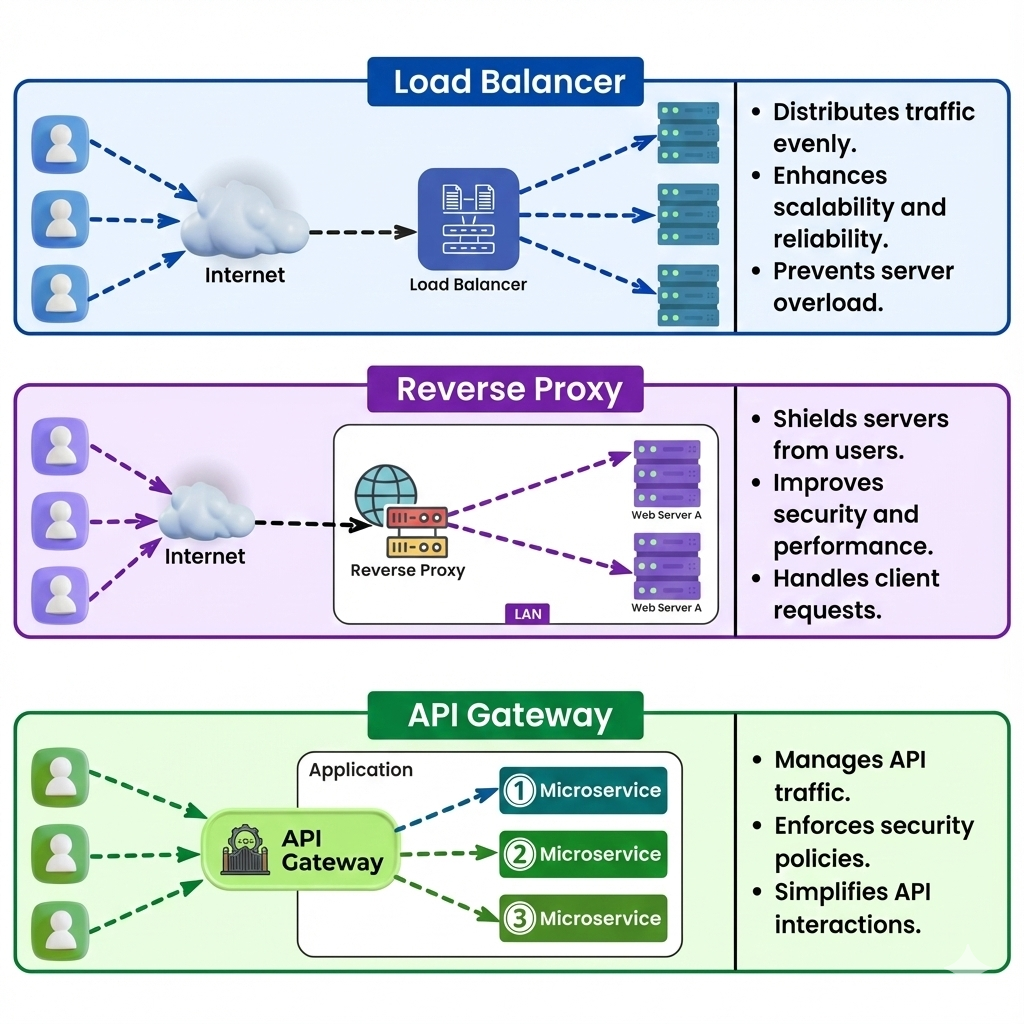
Traffic Management & APIs in System Design

Efficient traffic management is critical for building scalable, reliable, and secure systems.As systems grow, the number of users, requests, and services increases, making it essential to understand how traffic flows and how APIs are managed. In this blog, we’ll cover load balancers, reverse proxies, API gateways, and rate limiting with examples to make the concepts

Traffic Management & APIs in System Design Read More »

System Design Fundamentals & Interview Approach

System design is one of the most important skills for modern software engineers, yet it is also one of the most misunderstood. Many developers associate system design only with interviews, while others think it is relevant only for senior engineers or architects. In reality, system design is about thinking in systems — understanding how different

System Design Fundamentals & Interview Approach Read More »

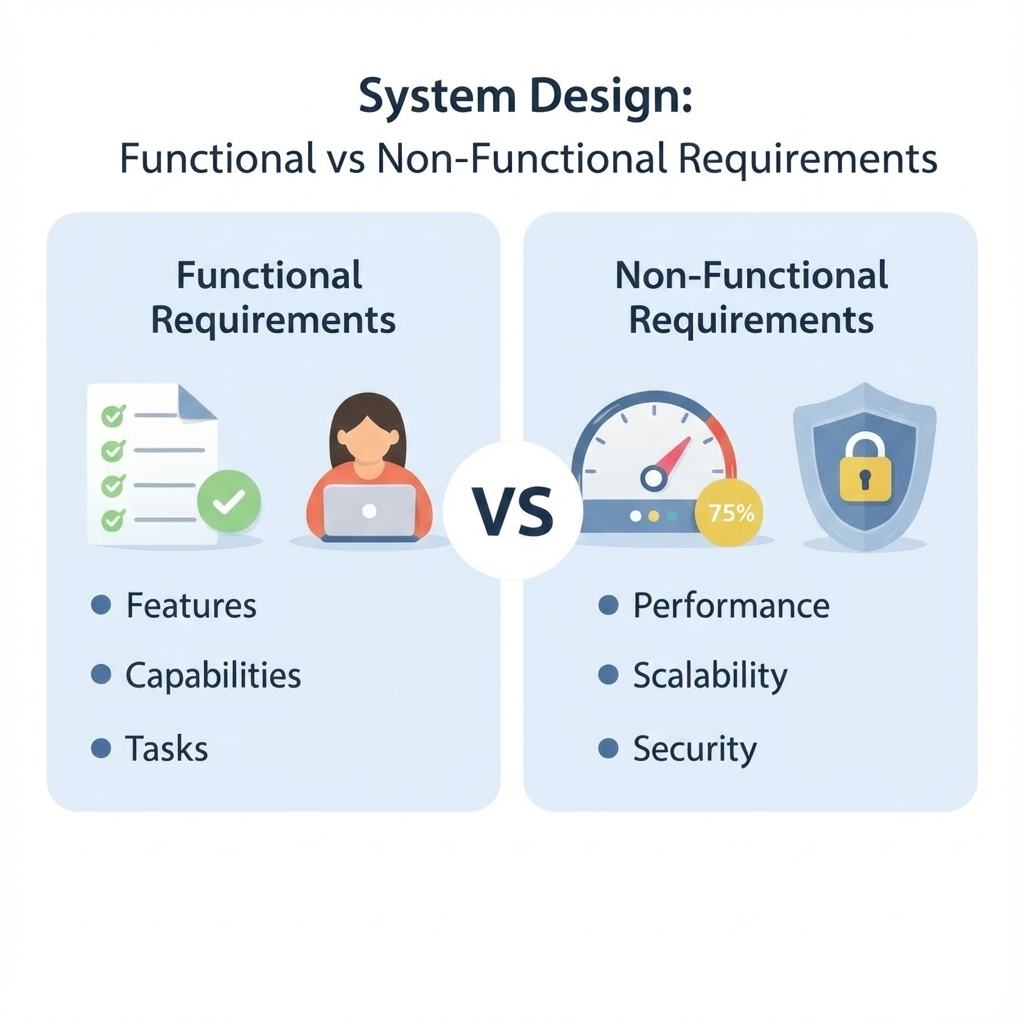
Functional vs Non-Functional Requirements

Every good system design starts with requirements.Before choosing databases, caches, or architectures, you must clearly understand what the system should do and how well it should do it. These two dimensions are known as functional requirements and non-functional requirements. Many system design failures — and interview failures — happen because engineers misunderstand or ignore this

Functional vs Non-Functional Requirements Read More »