System design is one of the most important skills for modern software engineers, yet it is also one of the most misunderstood. Many developers associate system design only with interviews, while others think it is relevant only for senior engineers or architects.
In reality, system design is about thinking in systems — understanding how different components work together to build scalable, reliable, and maintainable software.
This blog lays the foundation for your entire system design journey. By the end of this post, you will understand:
- What system design really means
- The difference between High-Level Design and Low-Level Design
- How system design interviews work
- A simple framework you can reuse in any system design discussion
What Is System Design?
System design is the process of defining the architecture, components, data flow, and trade-offs of a software system to meet specific requirements.
At its core, system design answers questions like:
- How does the system handle user requests?
- How does it scale as users grow?
- How does it stay reliable when components fail?
- How do different services communicate with each other?
System design is not about writing code.
It is about decision-making under constraints.
Why System Design Matters
System design matters because real-world systems are:
- Large
- Distributed
- Continuously evolving
Poor design decisions early on can lead to:
- Performance bottlenecks
- Downtime
- High operational costs
- Difficult maintenance
Good system design helps you:
- Build scalable systems
- Anticipate failures
- Make informed trade-offs
- Communicate technical ideas clearly
This is why system design is heavily tested in senior engineering interviews.
High-Level Design (HLD) vs Low-Level Design (LLD)
Understanding the difference between HLD and LLD is critical.
High-Level Design (HLD)
High-Level Design focuses on the big picture.
It answers:
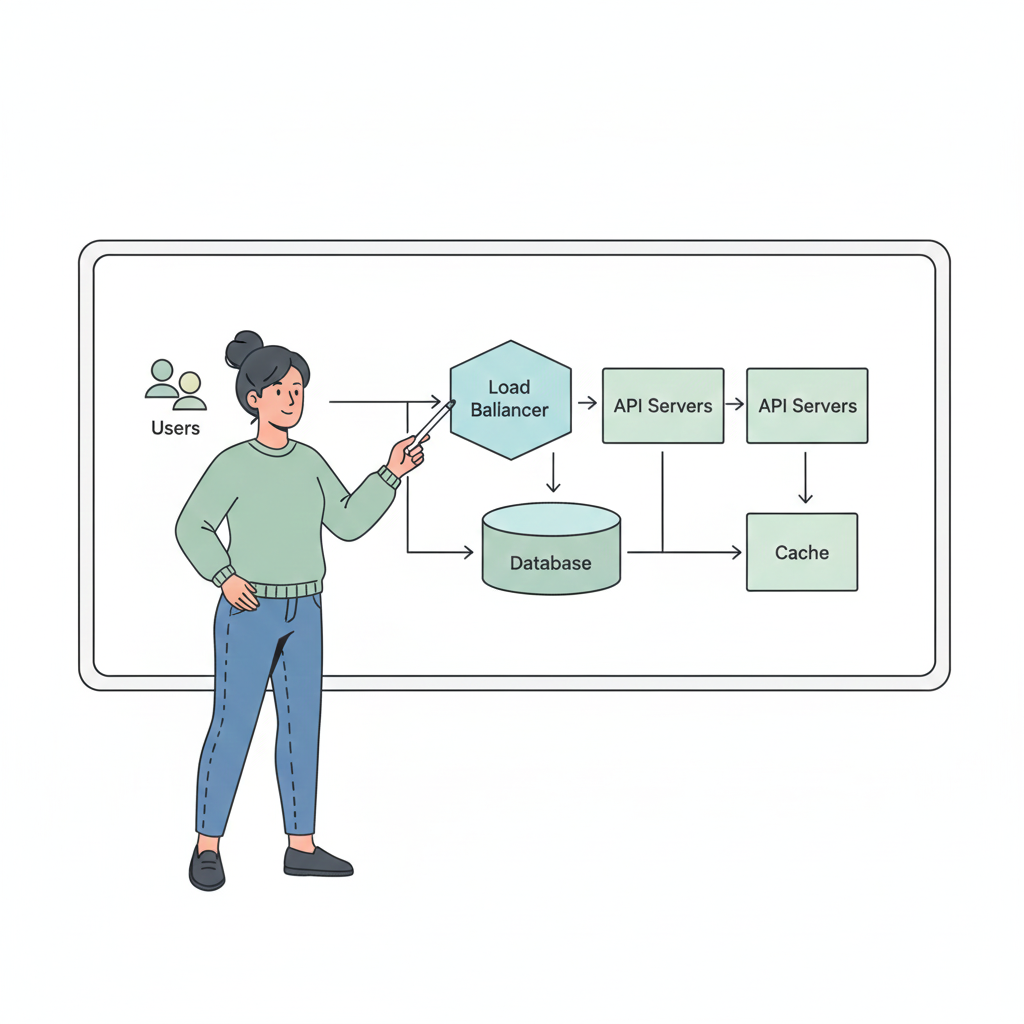
- What are the major components?
- How do they interact?
- How does data flow through the system?
Examples of HLD components:
- Clients (web, mobile)
- Load balancers
- Application servers
- Databases
- Caches
- Message queues
HLD is technology-agnostic and abstract.
Low-Level Design (LLD)
Low-Level Design focuses on implementation details.
It answers:
- Class structures
- APIs
- Database schemas
- Detailed algorithms
LLD is closer to actual code and is usually discussed after HLD.
Key Difference
High-Level Design defines what exists.
Low-Level Design defines how it is built.
What Is a System Design Interview?
A system design interview is a conversation where you are asked to design a real-world system, such as:
- A URL shortener
- A chat application
- A video streaming platform
- A notification system
The interviewer is not looking for a perfect solution.
They are evaluating:
- Your problem-solving approach
- Your ability to clarify requirements
- Your understanding of trade-offs
- Your communication skills
What Interviewers Really Care About
Interviewers are primarily evaluating:
- How you break down a complex problem
- How you handle ambiguity
- How you justify architectural decisions
- How well you understand scalability and reliability
- How clearly you communicate
Knowing tools is helpful.
Knowing why to use them is essential.
The Biggest Mistake Candidates Make
The most common mistake is starting to design too early.
Many candidates immediately jump to:
- Microservices
- Message queues
- Caching layers
Without understanding requirements, this approach fails.
System design should always start with clarity, not architecture.
A Simple System Design Interview Framework
Use this framework in every system design interview:
- Clarify requirements
- Define the high-level design
- Deep dive into core components
- Address scalability and reliability
- Discuss trade-offs and improvements
This structure keeps you organized and confident.
Step 1: Clarify Requirements
Start by asking questions.
Clarify both:
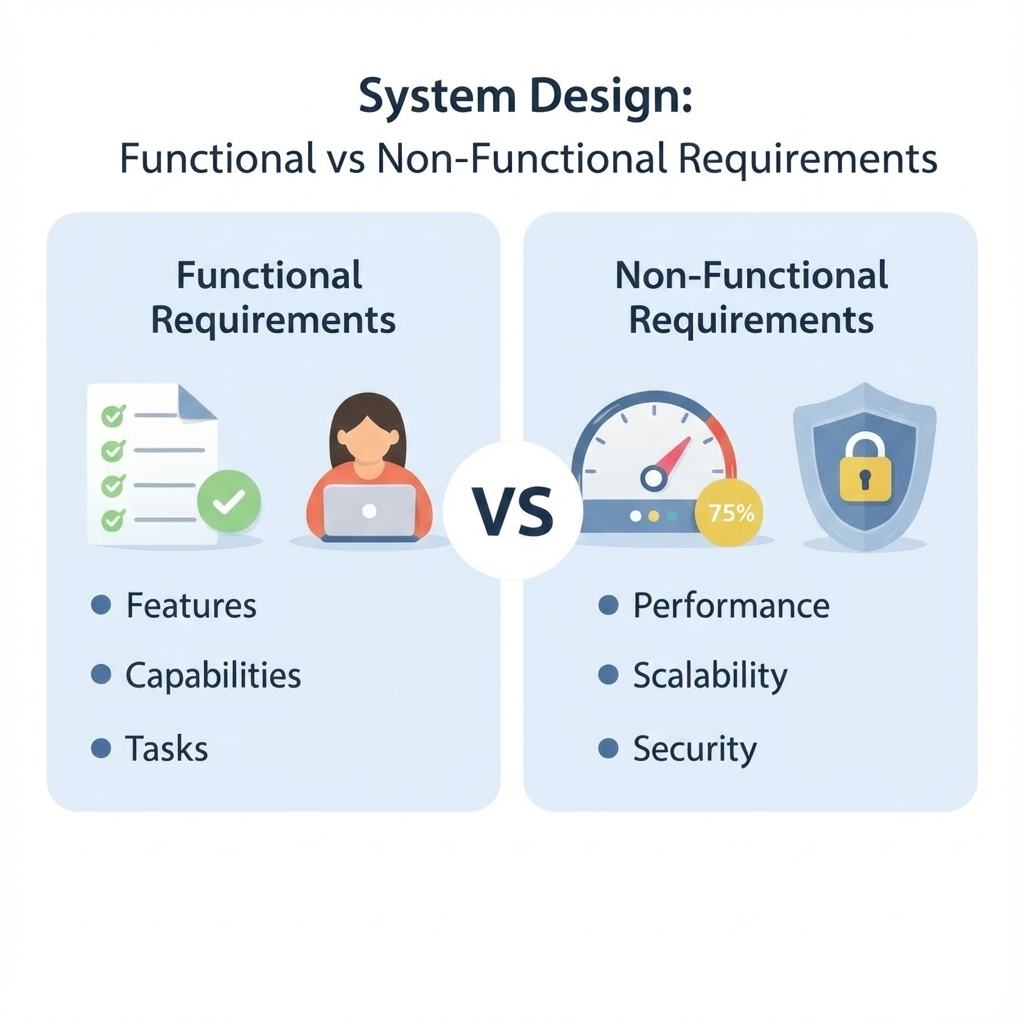
- Functional requirements (what the system does)
- Non-functional requirements (how the system behaves)
Examples of questions:
- Who are the users?
- How many users are expected?
- What operations are most frequent?
- What latency is acceptable?
- Is strong consistency required?
- Is global availability needed?
Never assume. Always ask.
Step 2: Define the High-Level Design
Once requirements are clear, move to high-level design.
At this stage:
- Identify major components
- Explain request and data flow
- Keep diagrams simple
Focus on:
- Clients
- Backend services
- Databases
- Caches
- External dependencies
Avoid implementation details.
Step 3: Deep Dive into Core Components
After high-level design, zoom into the most critical parts.
Typical deep dives include:
- Database design
- Caching strategy
- API design
- Messaging systems
Explain:
- Read and write flows
- Failure scenarios
- Performance bottlenecks
This shows depth.
Step 4: Scalability and Reliability
Now address system growth and failures.
Discuss:
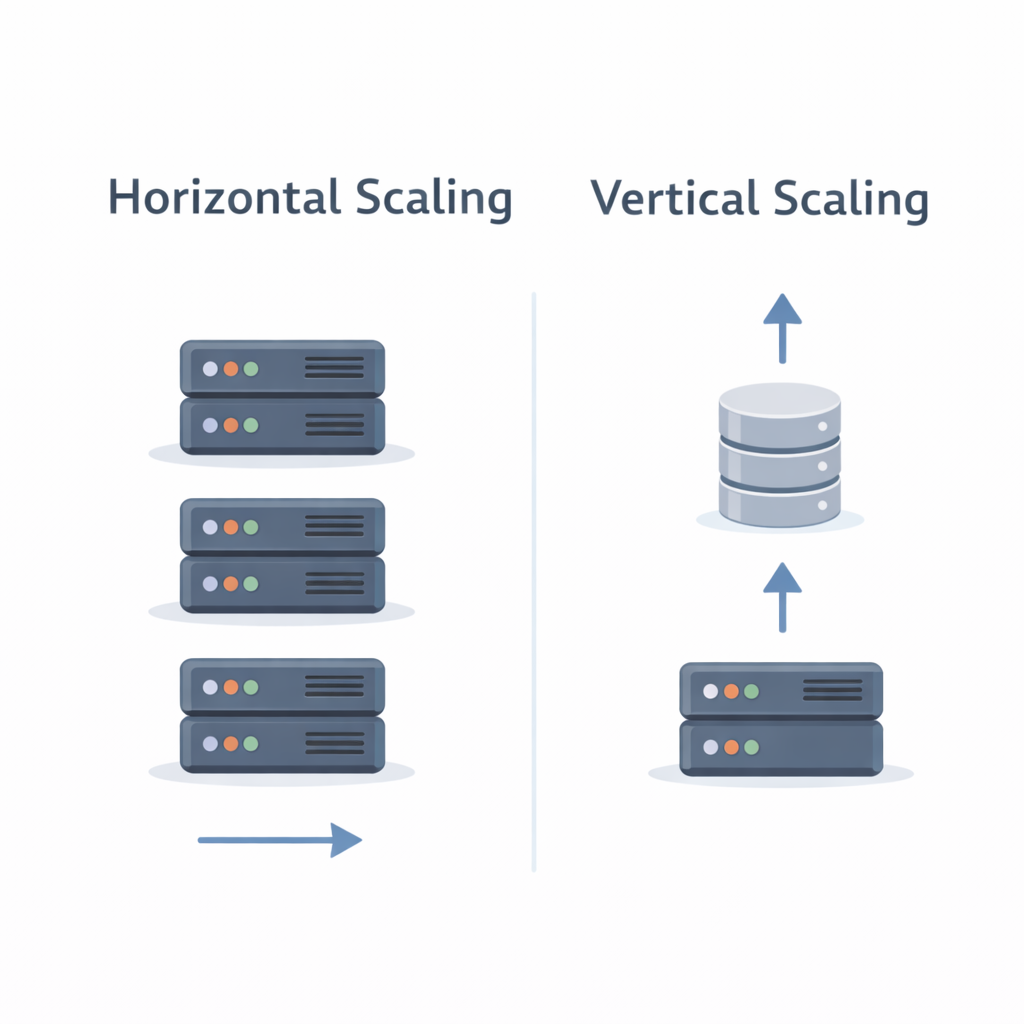
- Horizontal scaling
- Load balancing
- Replication
- Failover strategies
- Bottleneck mitigation
Always explain what happens when things break.
Step 5: Trade-Offs and Improvements
End by discussing trade-offs.
Examples:
- Consistency vs availability
- Cost vs performance
- Simplicity vs flexibility
Then suggest improvements for future scale.
This demonstrates senior-level thinking.
How to Communicate During the Interview
Strong communication is critical.
Best practices:
- Think out loud
- Speak slowly and clearly
- Ask for confirmation
- Adjust based on feedback
System design interviews are collaborative, not adversarial.
Key Takeaways
- System design is about decision-making, not tools
- Always start with requirements
- High-Level Design comes before Low-Level Design
- Use a structured framework
- Communicate trade-offs clearly
What’s Next?
In the next blog, we will dive into:
👉 Functional & Non-Functional Requirements
Understanding these will dramatically improve your system design decisions.