Latest posts
-
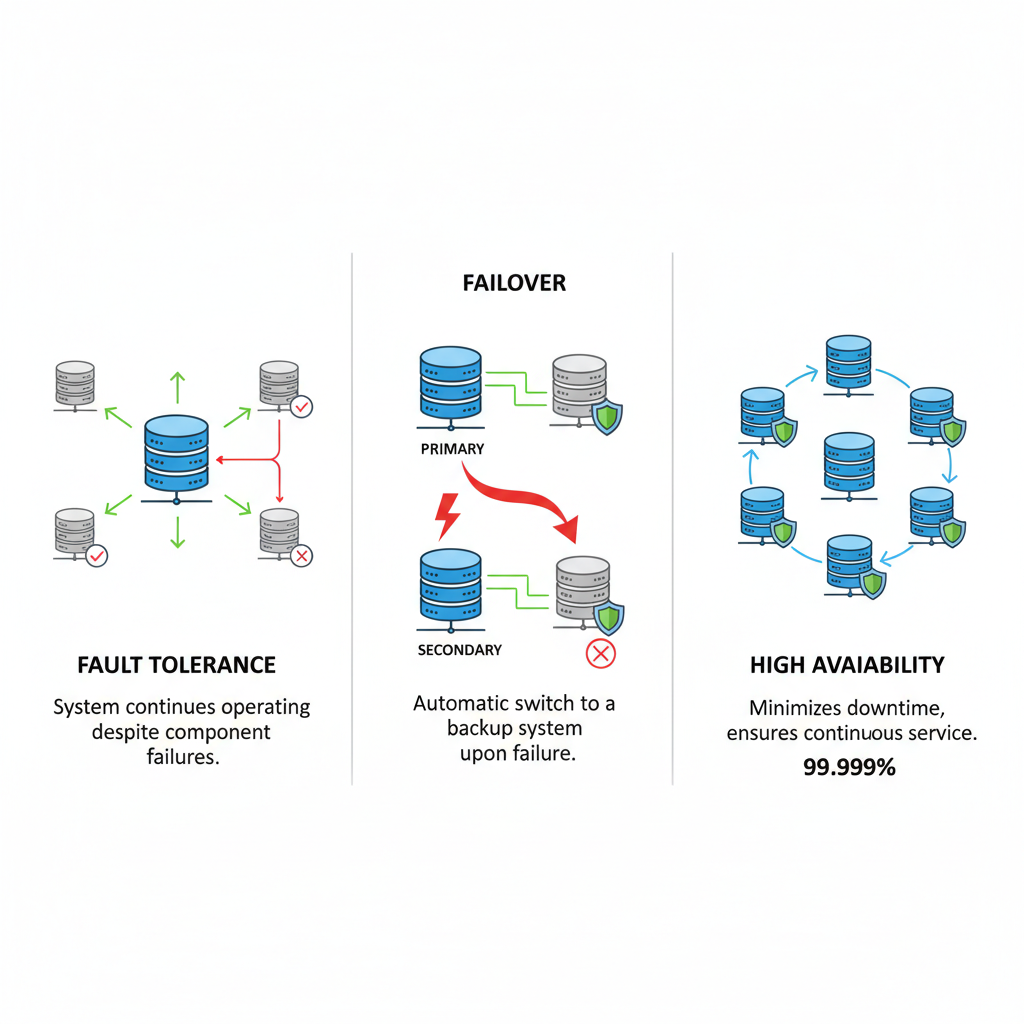
Fault Tolerance, Failover & High Availability
Failures are inevitable in distributed systems.Servers crash, networks fail, and data centers go down. Good system design focuses not on preventing failures, but on handling them gracefully. In this blog, we’ll cover fault tolerance, failover, and high availability, and how modern systems stay reliable at scale. Understanding Failures in Distributed Systems Common types of…
-
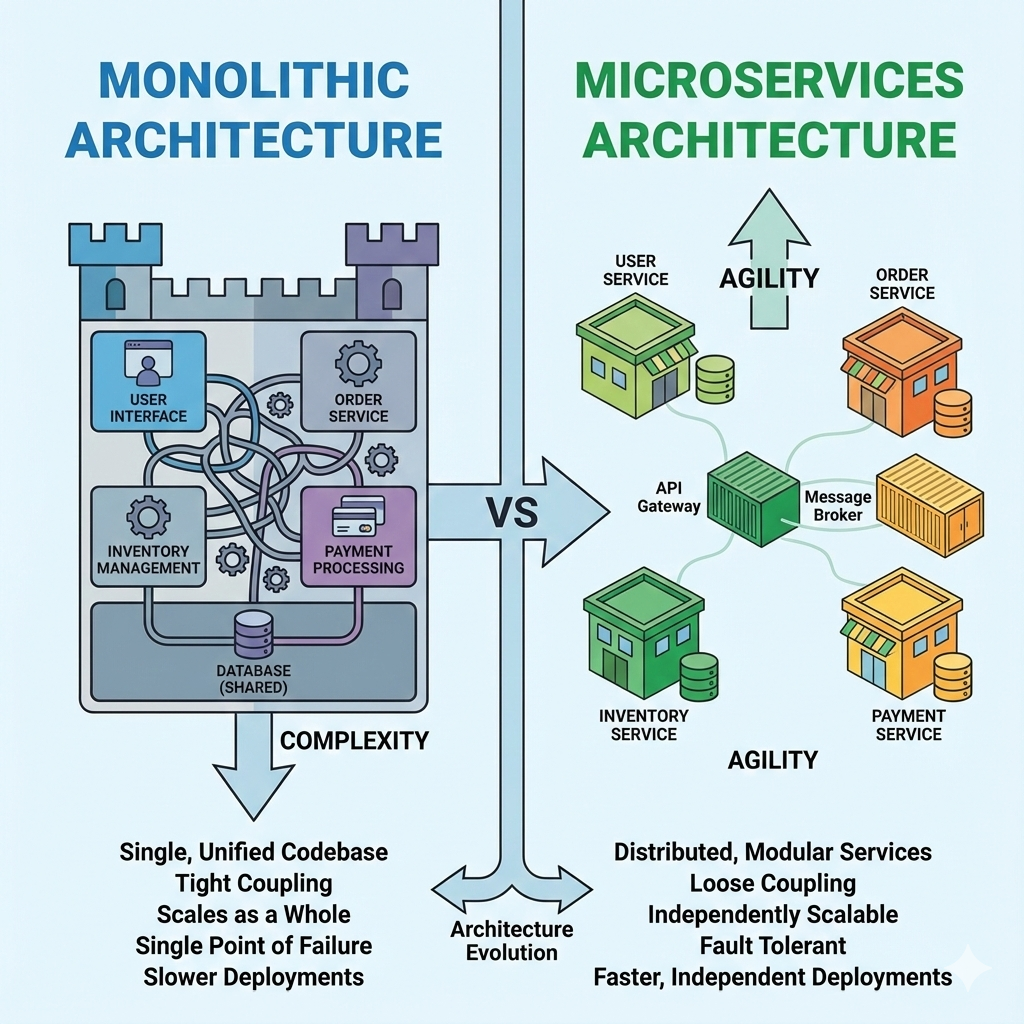
Microservices vs Monolith
Choosing the right architecture is one of the most important decisions in system design.Two common approaches are monolithic architecture and microservices architecture. Each has its strengths, weaknesses, and ideal use cases. In this blog, we’ll clearly compare monoliths vs microservices, explain trade-offs, and help you decide when to use each. What Is a Monolithic…
-
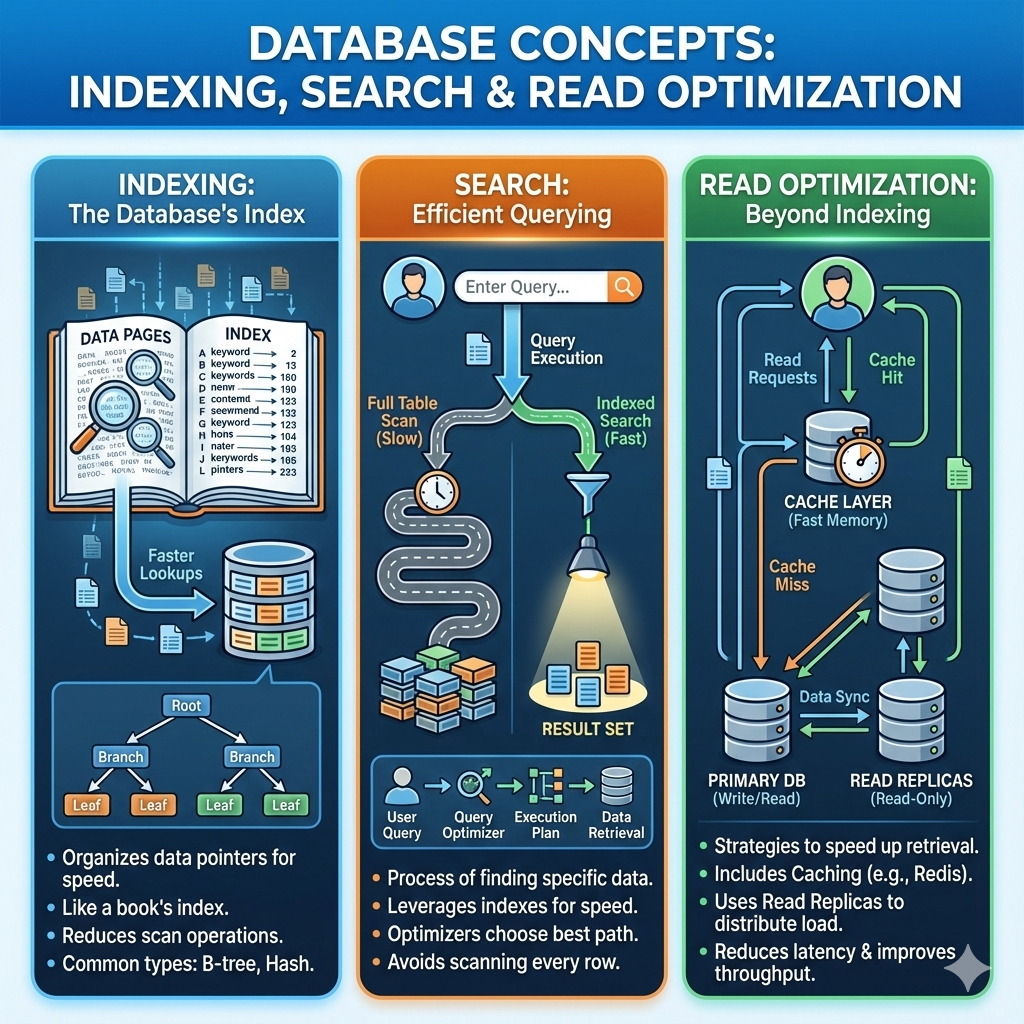
Indexing, Search & Read Optimization
In large-scale systems, reads dominate writes.Users expect fast responses, whether they’re searching, scrolling feeds, or loading product pages. This is why indexing and read optimization are critical parts of system design. In this blog, we’ll cover how indexes work, their trade-offs, and how search systems optimize reads at scale. What Is an Index? An…
-
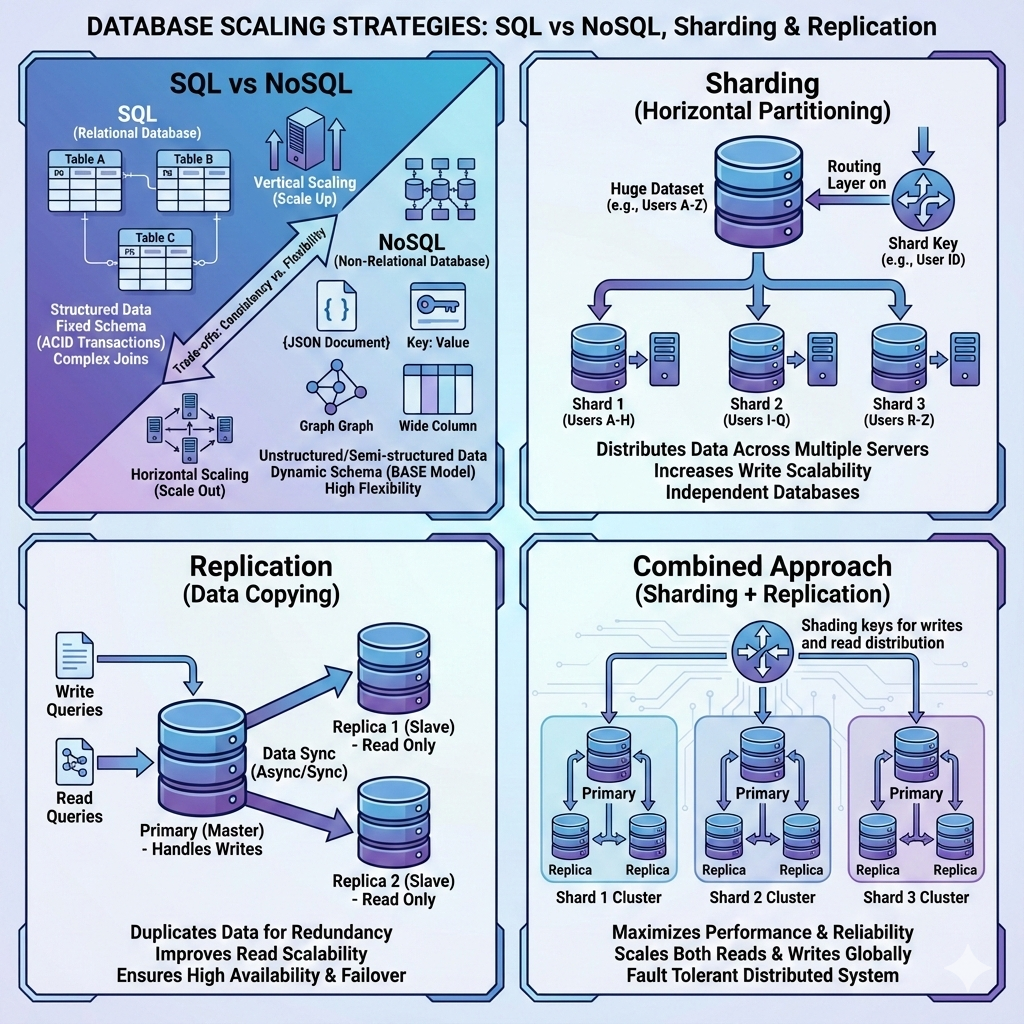
SQL vs NoSQL, Sharding & Replication
As systems grow, data becomes the hardest part to scale.Choosing the right database model and scaling strategy directly impacts performance, availability, consistency, and cost. In this blog, we’ll go deeper into SQL vs NoSQL, sharding, and replication, covering all essential concepts needed for real-world system design and interviews. SQL vs NoSQL Databases SQL Databases…
-
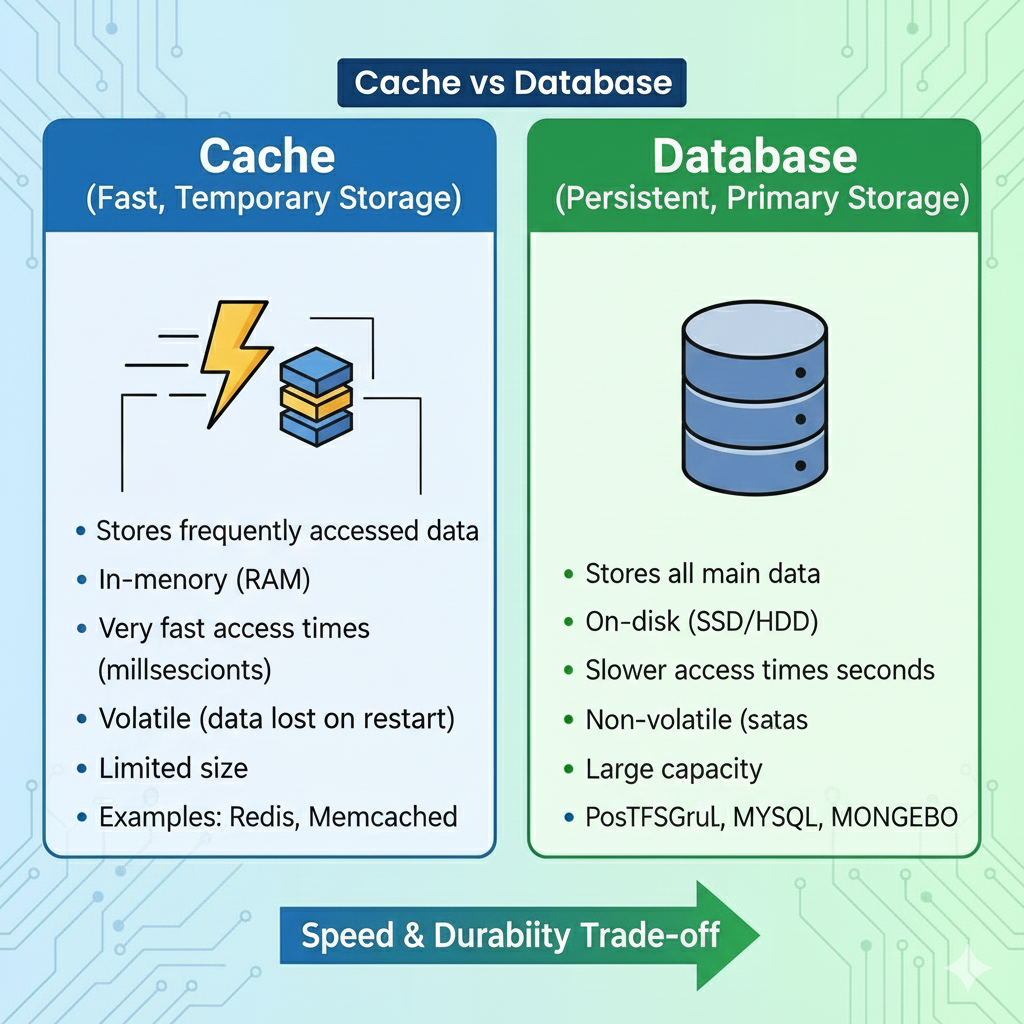
Caching, Databases & Storage Basics
As systems grow, performance and scalability become critical.Most real-world applications cannot rely on databases alone. This is where caching and proper storage choices play a key role in system design. In this blog, we’ll cover why caching is needed, how databases differ, and basic storage types—keeping it simple and practical. Why Caching Is Needed…
-

Authentication, Authorization & Stateless Services
Security and scalability are core concerns in system design.Before building distributed or microservices-based systems, it’s important to clearly understand authentication, authorization, and stateless services—concepts that are often confused but fundamentally different. Authentication vs Authorization Authentication Authentication answers the question:“Who are you?” It verifies the identity of a user or system. Examples: Authorization Authorization answers…
-
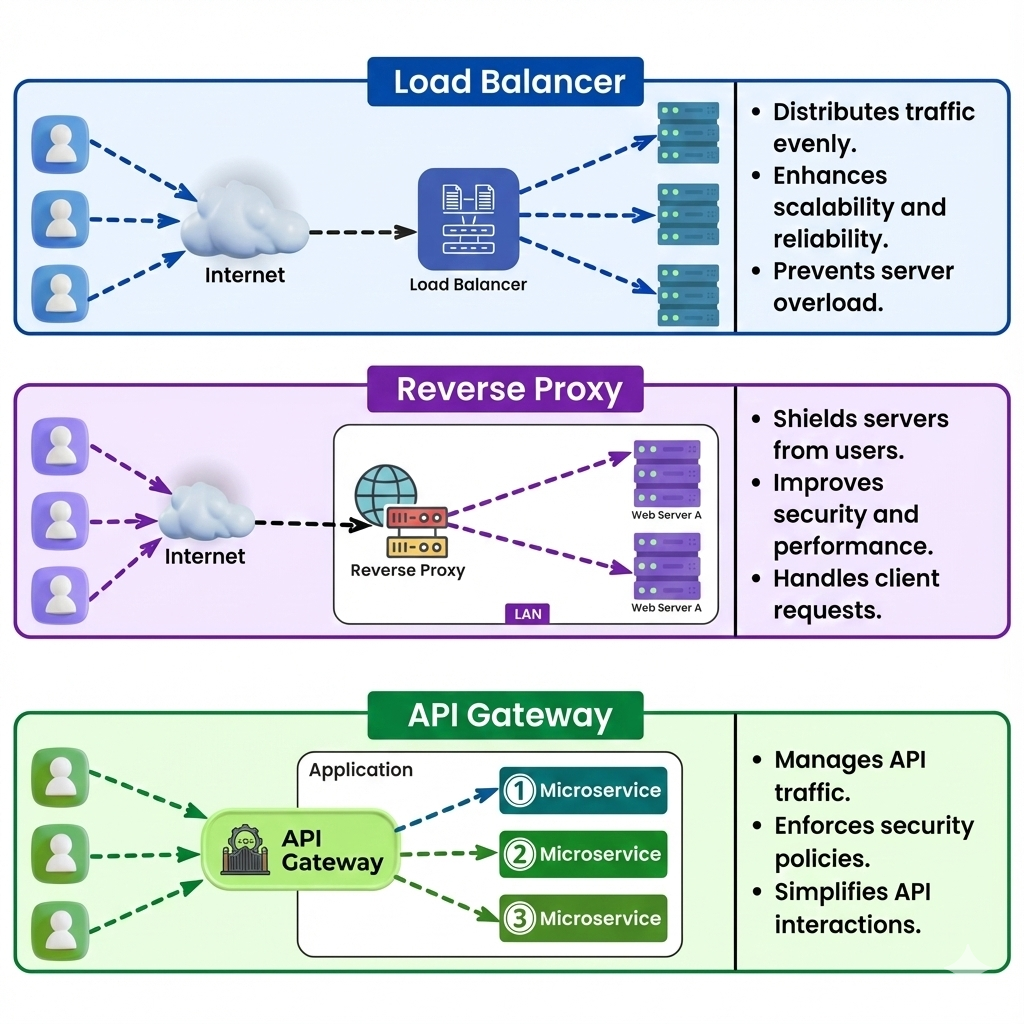
Traffic Management & APIs in System Design
Efficient traffic management is critical for building scalable, reliable, and secure systems.As systems grow, the number of users, requests, and services increases, making it essential to understand how traffic flows and how APIs are managed. In this blog, we’ll cover load balancers, reverse proxies, API gateways, and rate limiting with examples to make the…
-
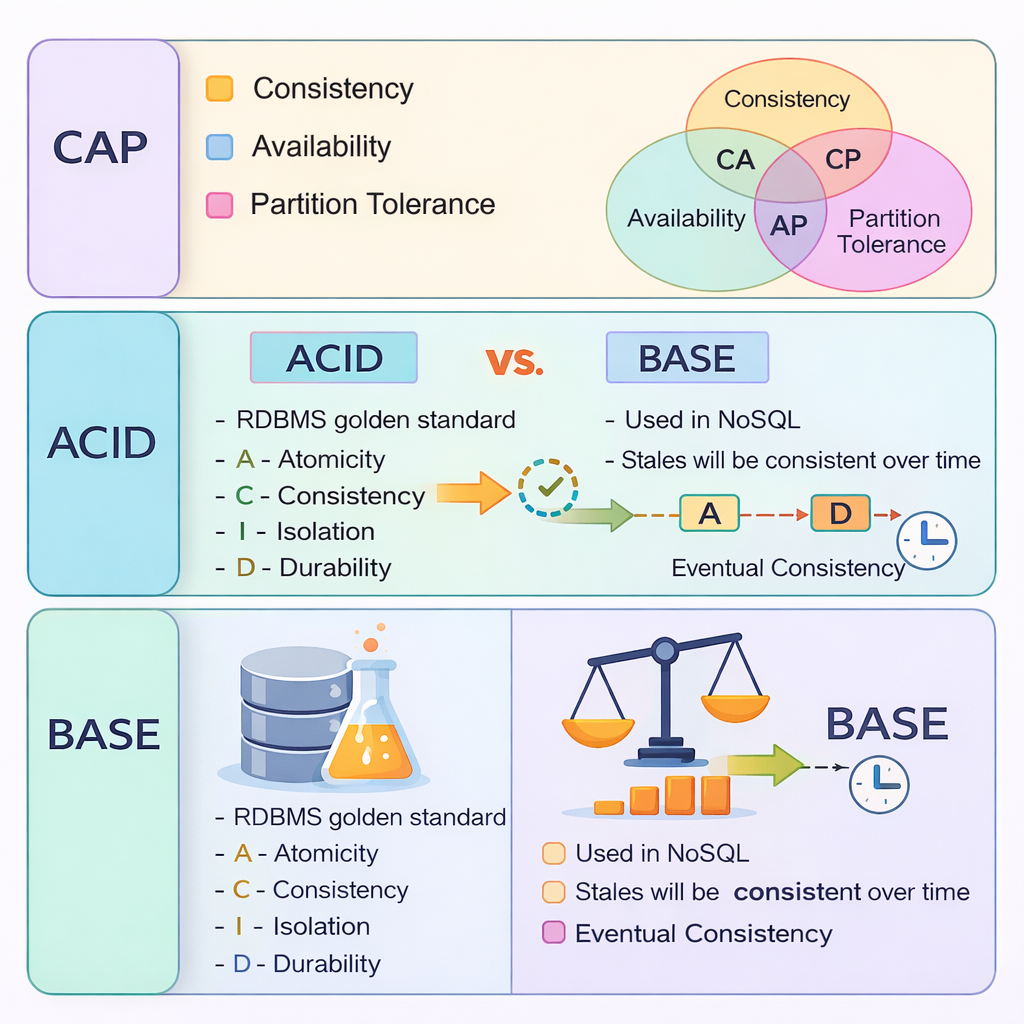
CAP Theorem, ACID & BASE in System Design
Understanding how distributed systems behave is critical for building reliable software.Two key concepts that guide system behavior are the CAP Theorem and ACID/BASE properties. This blog explains these concepts simply, so you can apply them in real-world designs and interviews. CAP Theorem CAP stands for Consistency, Availability, and Partition Tolerance. Key Points: Rule: In…
-
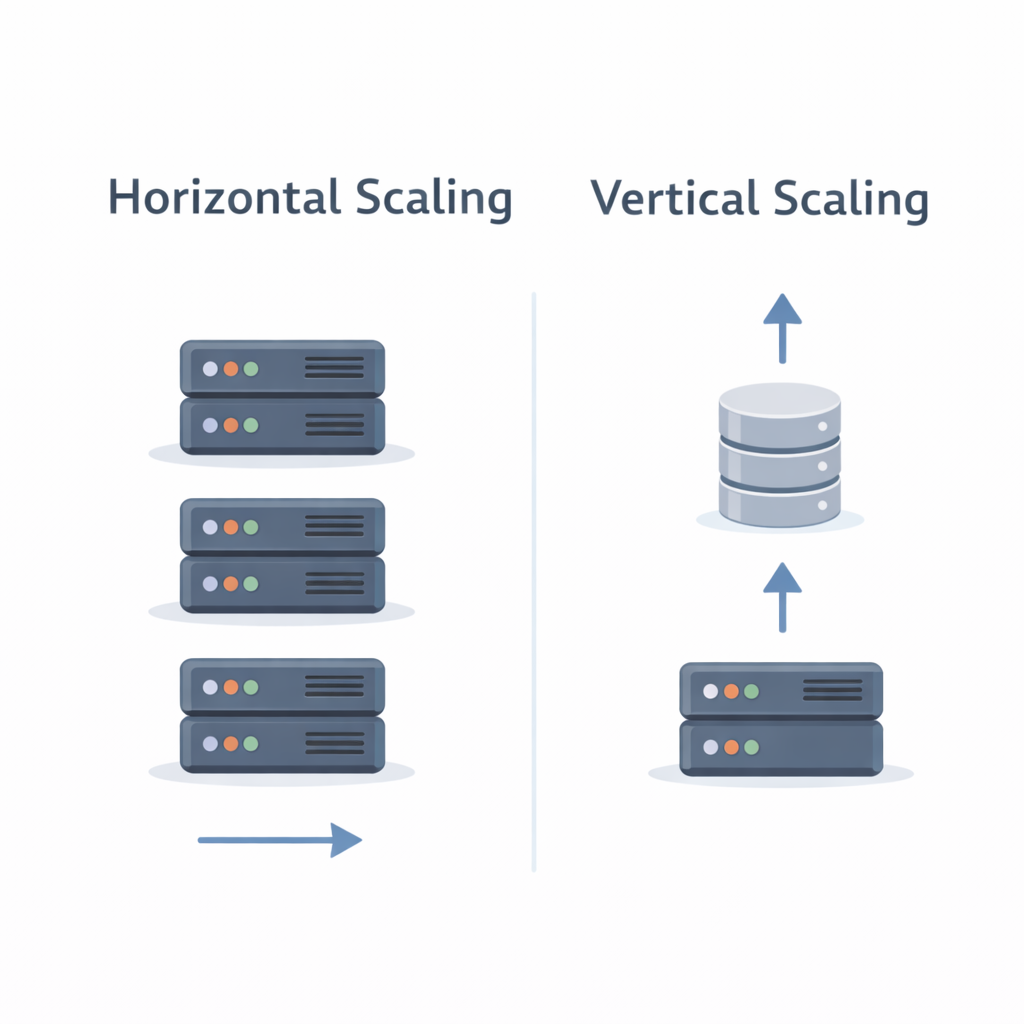
Scaling Basics & Estimation in System Design
Scalability is one of the most important concerns in system design.It defines whether a system can grow smoothly as usage increases or collapses under pressure. Many engineers understand scalability in theory but struggle to reason about numbers.This blog focuses on simple, practical scaling concepts and basic estimation techniques that are easy to apply in…