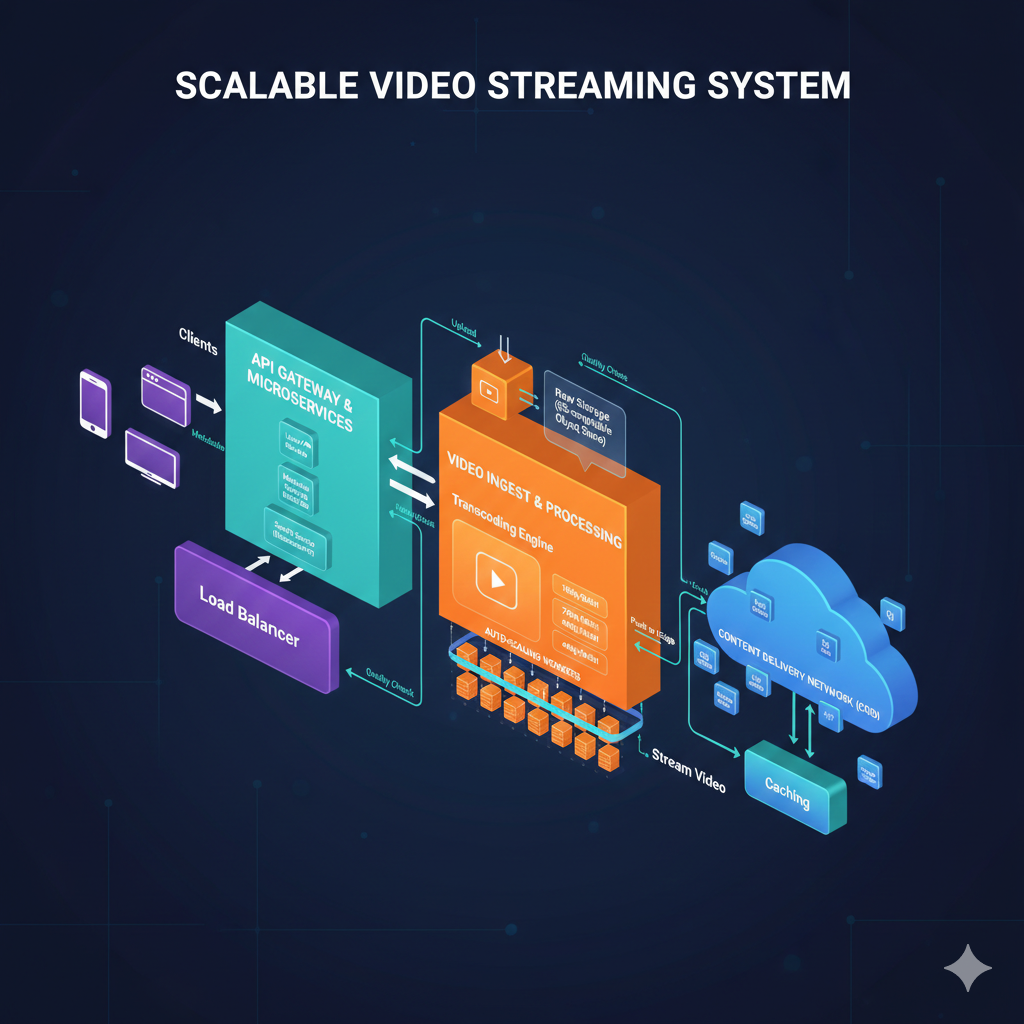
Video streaming platforms like YouTube, Netflix, Hotstar, Amazon Prime, and Vimeo serve millions of hours of video daily. Designing such a system is challenging because video streaming is bandwidth-heavy, latency-sensitive, and highly scalable by nature.
Unlike text or images, video data is large, continuous, and must be delivered smoothly even under unstable network conditions. In this blog, we will design a real-world, scalable video streaming system, explaining why each architectural decision is made.
Index
- Understanding the Video Streaming Problem
- Functional Requirements
- Non-Functional Requirements (Traffic, Bandwidth & Scale)
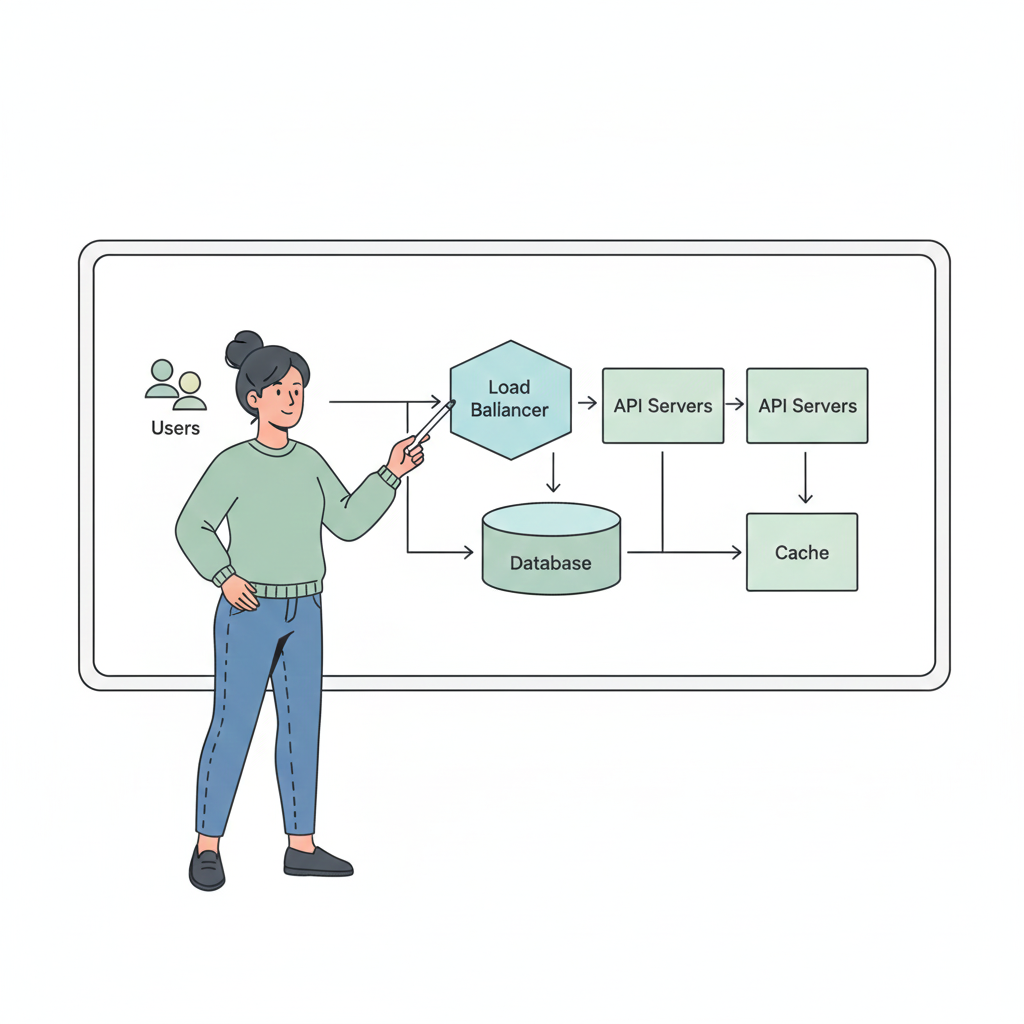
- High-Level Architecture Overview
- Video Upload & Ingestion Flow
- Video Processing Pipeline
- Video Storage Architecture
- Content Delivery Network (CDN) & Edge Caching
- Video Playback Flow (End-to-End Lifecycle)
- API Design for Video Streaming
- Database Design & Metadata Modeling
- Scalability Strategy & Traffic Justification
- Reliability, Fault Tolerance & Failover
- Security & Access Control
- Trade-offs & Design Decisions
- Real-World Architecture Summary
1. Understanding the Video Streaming Problem
A video streaming system must:
- Accept video uploads
- Process videos into multiple formats
- Store massive video files efficiently
- Deliver videos smoothly to users worldwide
- Adapt video quality based on network conditions
The core challenge is scale:
- Few uploads
- Extremely high reads
- Massive bandwidth consumption
This imbalance shapes the entire system design.
2. Functional Requirements
The system should allow users to:
- Upload videos
- Watch videos with minimal buffering
- Resume playback
- Support multiple resolutions (240p → 4K)
- Support mobile and web clients
Optional but realistic:
- Subtitles
- Thumbnails
- Recommendations
- Live streaming (out of scope here)
3. Non-Functional Requirements (Traffic, Bandwidth & Scale)
Example Traffic Assumptions
- 10 million daily active users
- Average video length: 10 minutes
- Average bitrate: 3 Mbps
- Peak concurrent viewers: 1 million
➡️ Bandwidth requirement:
1M × 3 Mbps = 3 Tbps peak
Key Non-Functional Goals
- Low startup latency
- Minimal buffering
- High availability (99.9%+)
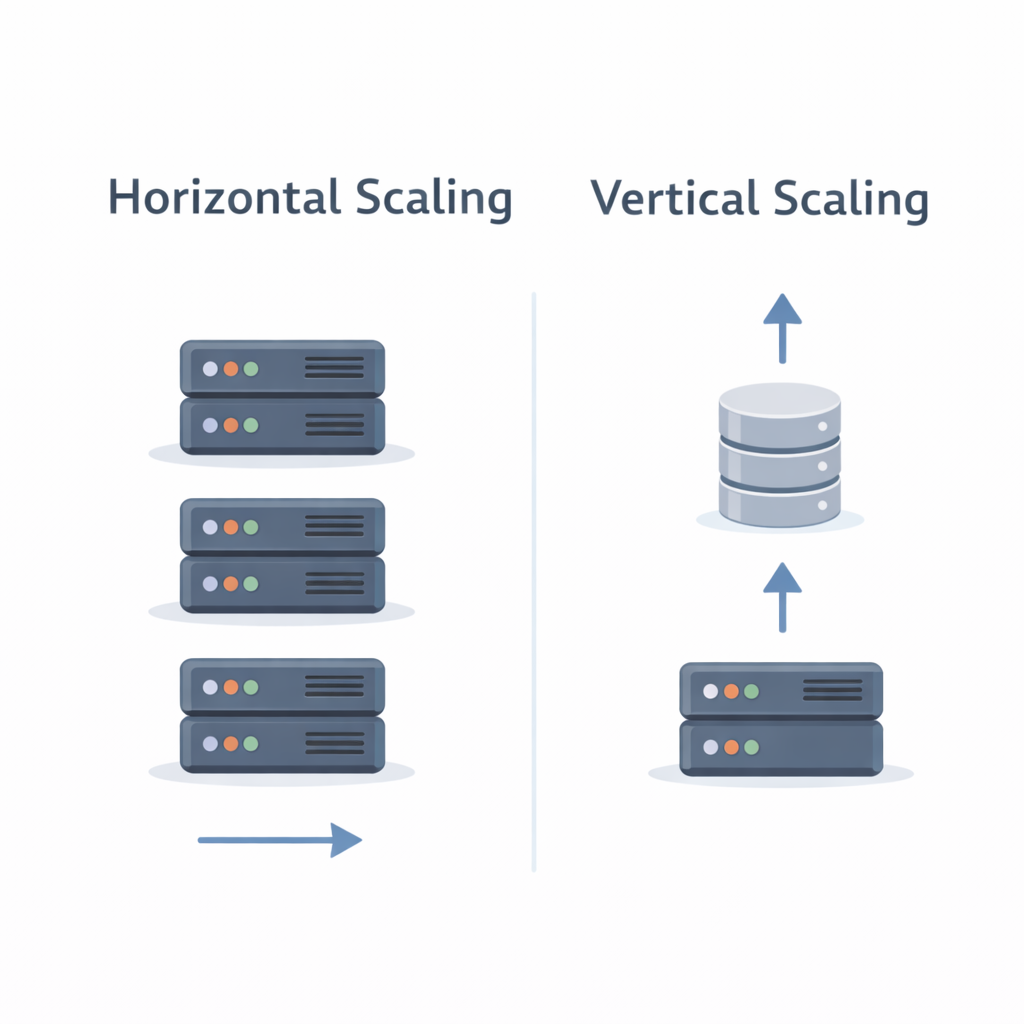
- Horizontal scalability
- Global delivery
These numbers justify CDNs, chunking, and adaptive bitrate streaming.
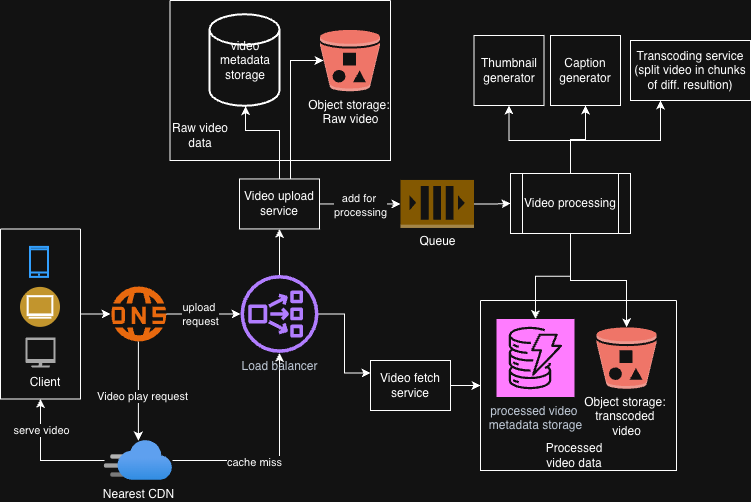
4. High-Level Architecture Overview
At a high level, the system consists of:
- Client (Web/Mobile/TV)
- Load Balancer
- Upload API Service
- Video Processing Service
- Metadata Service
- Object Storage
- CDN
- Databases
- Message Queue
Each component is designed to scale independently.
5. Video Upload & Ingestion Flow
Step-by-Step Flow
- User uploads video via client
- Upload API generates pre-signed URL
- Client uploads video directly to object storage
- Metadata stored in database
- Event sent to message queue
Why Direct Upload to Storage?
- Avoids overloading API servers
- Supports large file uploads
- Improves reliability
6. Video Processing Pipeline
Once uploaded, the video enters the processing pipeline.
Components
- Transcoding Service
- Thumbnail Generator
- Subtitle Processor (optional)
Encoding & Formats
- H.264 / H.265
- VP9 / AV1 (optional)
Adaptive Bitrate Streaming (ABR)
Videos are split into small chunks (2–6 seconds) and encoded at multiple resolutions.
Why ABR?
- Adapts to network conditions
- Prevents buffering
- Improves user experience
Protocols:
- HLS
- MPEG-DASH
7. Video Storage Architecture
Storage Type
Object Storage
- AWS S3
- Google Cloud Storage
- Azure Blob Storage
Why Object Storage?
- Massive scalability
- Cost-effective
- High durability (11 9s)
Storage Layout
/videos/{video_id}/{resolution}/{chunk_id}
This layout simplifies CDN integration.
8. Content Delivery Network (CDN) & Edge Caching
CDNs are critical for video streaming.
CDN Responsibilities
- Cache video chunks at edge locations
- Serve content closest to users
- Reduce latency and origin load
Popular CDNs
- CloudFront
- Akamai
- Cloudflare
Why CDN?
- Video traffic is read-heavy
- Origin servers cannot handle global load alone
For more understanding on ABR and CDN, read How ABR and CDN together degine modern video streaming
9. Video Playback Flow (End-to-End Lifecycle)
Playback Lifecycle Example
- User opens video page
- Client requests playback metadata
- Streaming URL returned
- Client requests first video chunk from CDN
- CDN serves chunk (or fetches from origin)
- Client dynamically switches bitrate
This flow ensures fast startup and smooth playback.
10. API Design for Video Streaming
Upload Initialization
POST /videos/initiate-upload
Response
{
  "upload_url": "signed_url",
  "video_id": "vid123"
}
Get Video Metadata
GET /videos/{video_id}
Response
{
  "title": "System Design Explained",
  "stream_url": "cdn_url/playlist.m3u8"
}
11. Database Design & Metadata Modeling
Video Metadata Table
Video(
  video_id,
  user_id,
  title,
  duration,
  status,
  created_at
)
Processing Status Table
VideoProcessing(
  video_id,
  resolution,
  status
)
Why Separate Metadata?
- Small, frequently accessed
- Independent scaling from video files
Databases:
- MySQL/PostgreSQL (metadata)
- DynamoDB/Cassandra (high scale)
12. Scalability Strategy & Traffic Justification
As traffic grows:
- CDN absorbs read traffic
- Object storage scales automatically
- Processing workers scale horizontally
- Databases shard by
video_id
Example
If viewers double:
- CDN handles most load
- No DB or API bottleneck
13. Reliability, Fault Tolerance & Failover
- Retry video processing jobs
- Multi-region object storage
- CDN failover
- Graceful degradation (lower quality)
This ensures uninterrupted playback.
14. Security & Access Control
- Signed URLs with expiry
- DRM (Widevine, FairPlay)
- Token-based access control
- Rate limiting uploads
Security prevents unauthorized access and abuse.
15. Trade-offs & Design Decisions
- Storage cost vs quality
- Latency vs consistency
- Preprocessing vs on-demand encoding
Real systems constantly balance cost, performance, and experience.
16. Real-World Architecture Summary
A scalable video streaming system:
- Uses object storage + CDN
- Relies on chunked, adaptive streaming
- Separates metadata from video data
- Scales horizontally at every layer
- Optimizes for bandwidth efficiency
What’s Next?
👉 Design a scalable Rate Limiter
Where we’ll design a critical system protection component used across APIs and distributed systems.