System Design Fundamentals

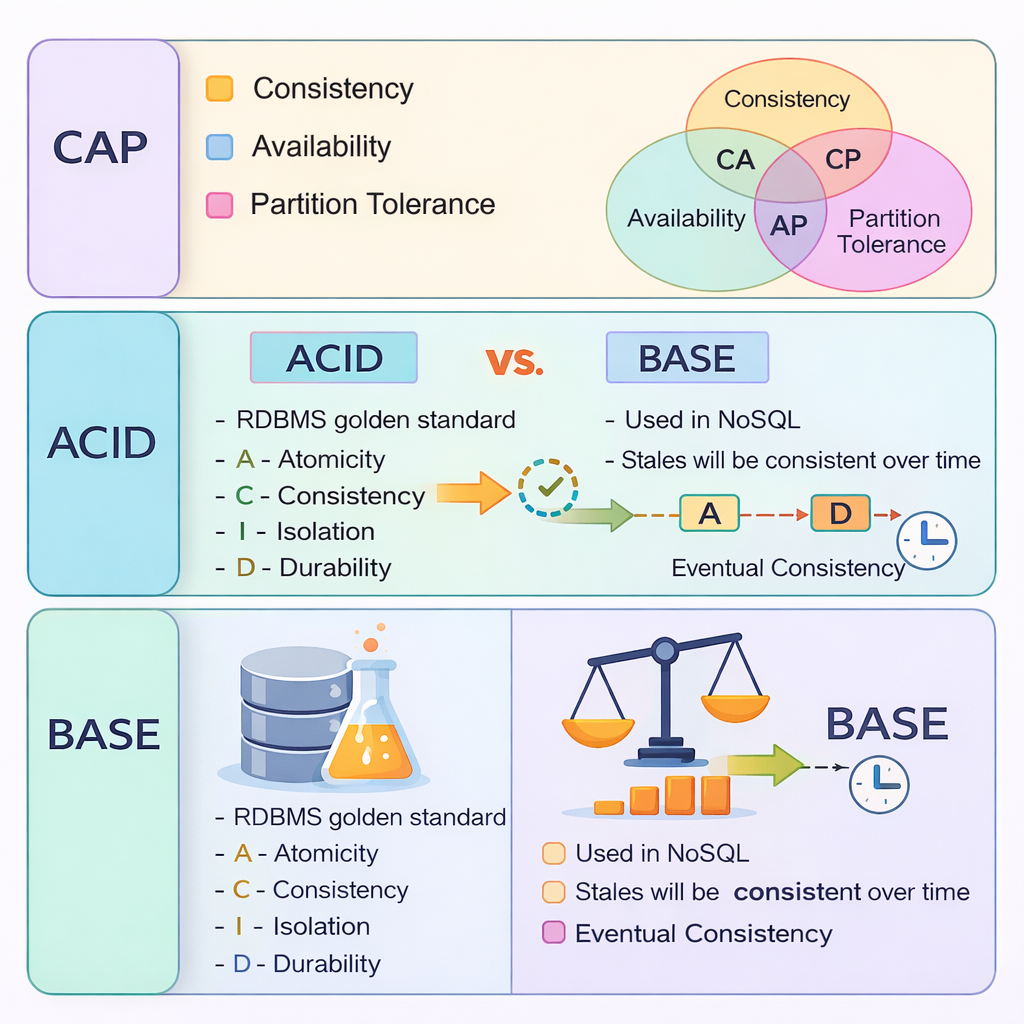
CAP Theorem, ACID & BASE in System Design

Understanding how distributed systems behave is critical for building reliable software.Two key concepts that guide system behavior are the CAP Theorem and ACID/BASE properties. This blog explains these concepts simply, so you can apply them in real-world designs and interviews. CAP Theorem CAP stands for Consistency, Availability, and Partition Tolerance. Key Points: Rule: In a […]

CAP Theorem, ACID & BASE in System Design Read More »
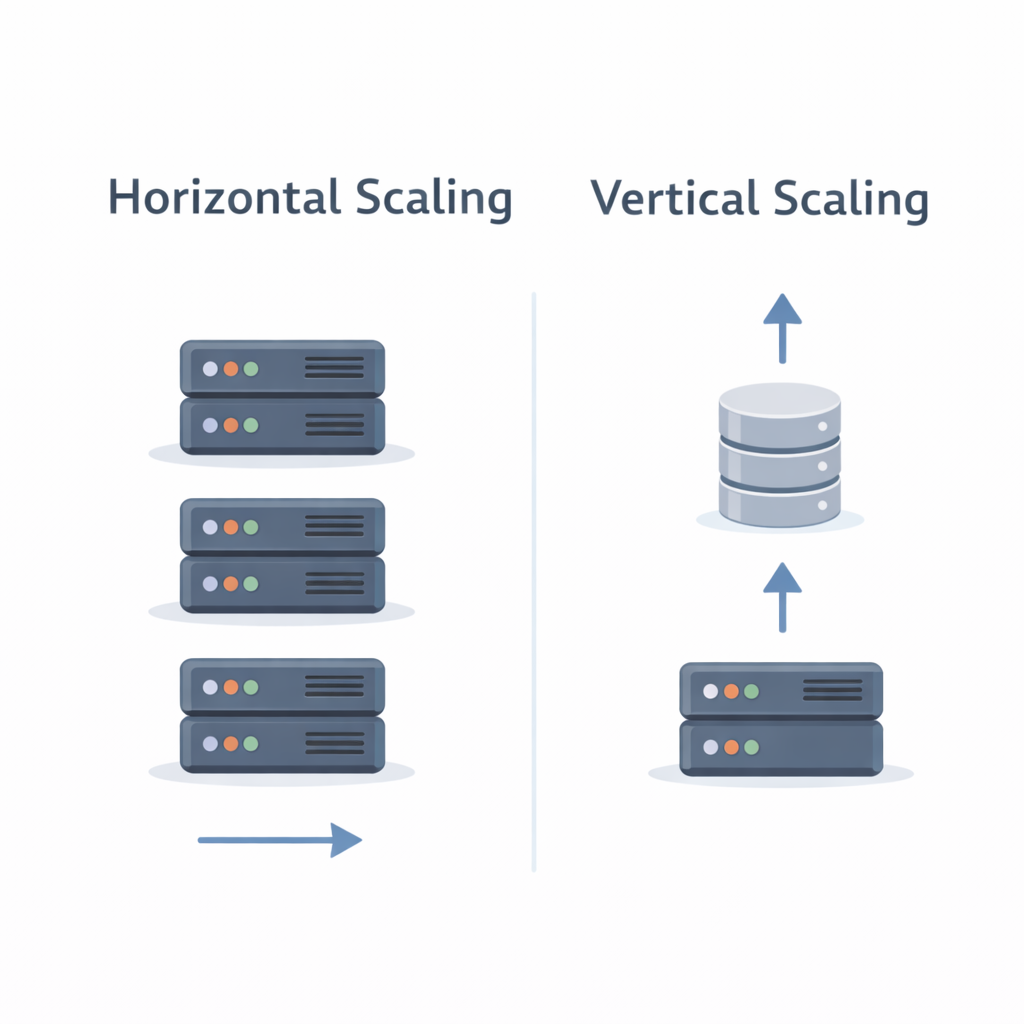
Scaling Basics & Estimation in System Design

Scalability is one of the most important concerns in system design.It defines whether a system can grow smoothly as usage increases or collapses under pressure. Many engineers understand scalability in theory but struggle to reason about numbers.This blog focuses on simple, practical scaling concepts and basic estimation techniques that are easy to apply in real

Scaling Basics & Estimation in System Design Read More »

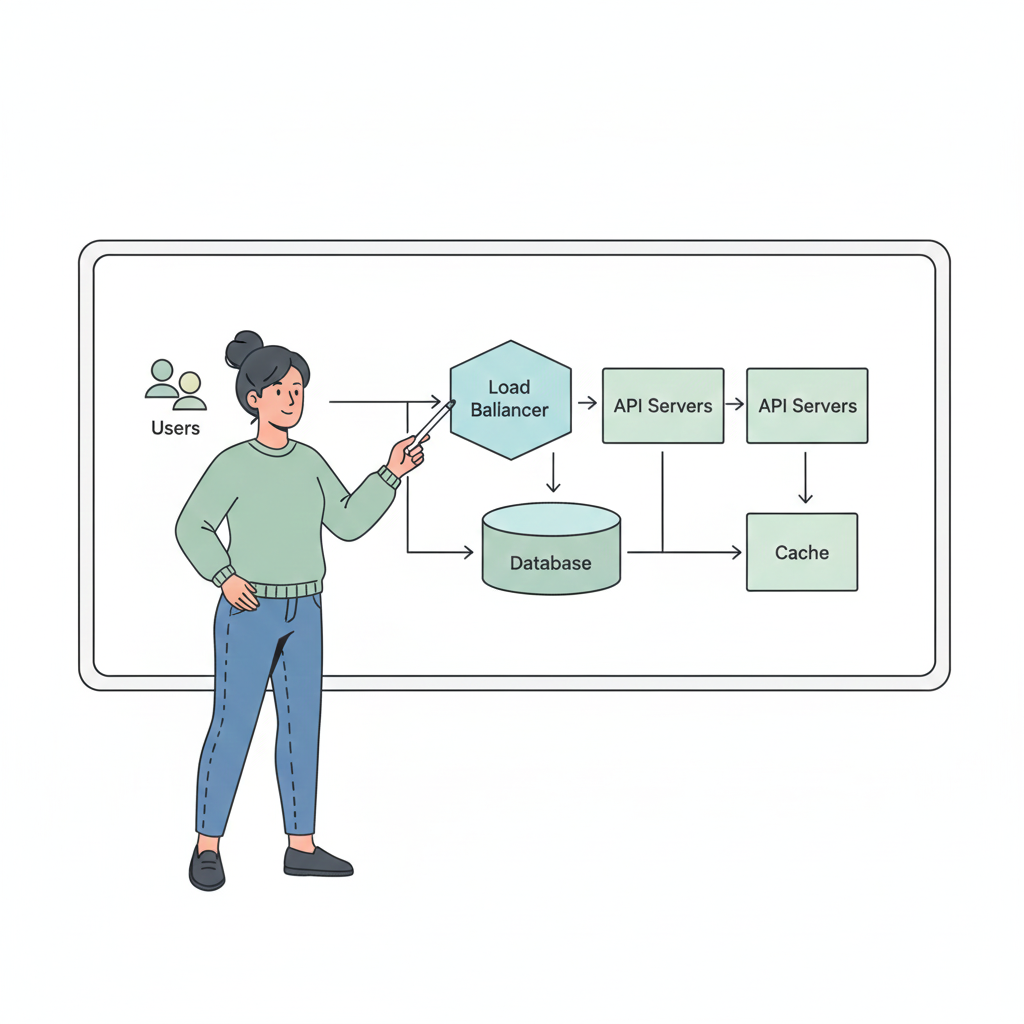
System Design Fundamentals & Interview Approach

System design is one of the most important skills for modern software engineers, yet it is also one of the most misunderstood. Many developers associate system design only with interviews, while others think it is relevant only for senior engineers or architects. In reality, system design is about thinking in systems — understanding how different

System Design Fundamentals & Interview Approach Read More »

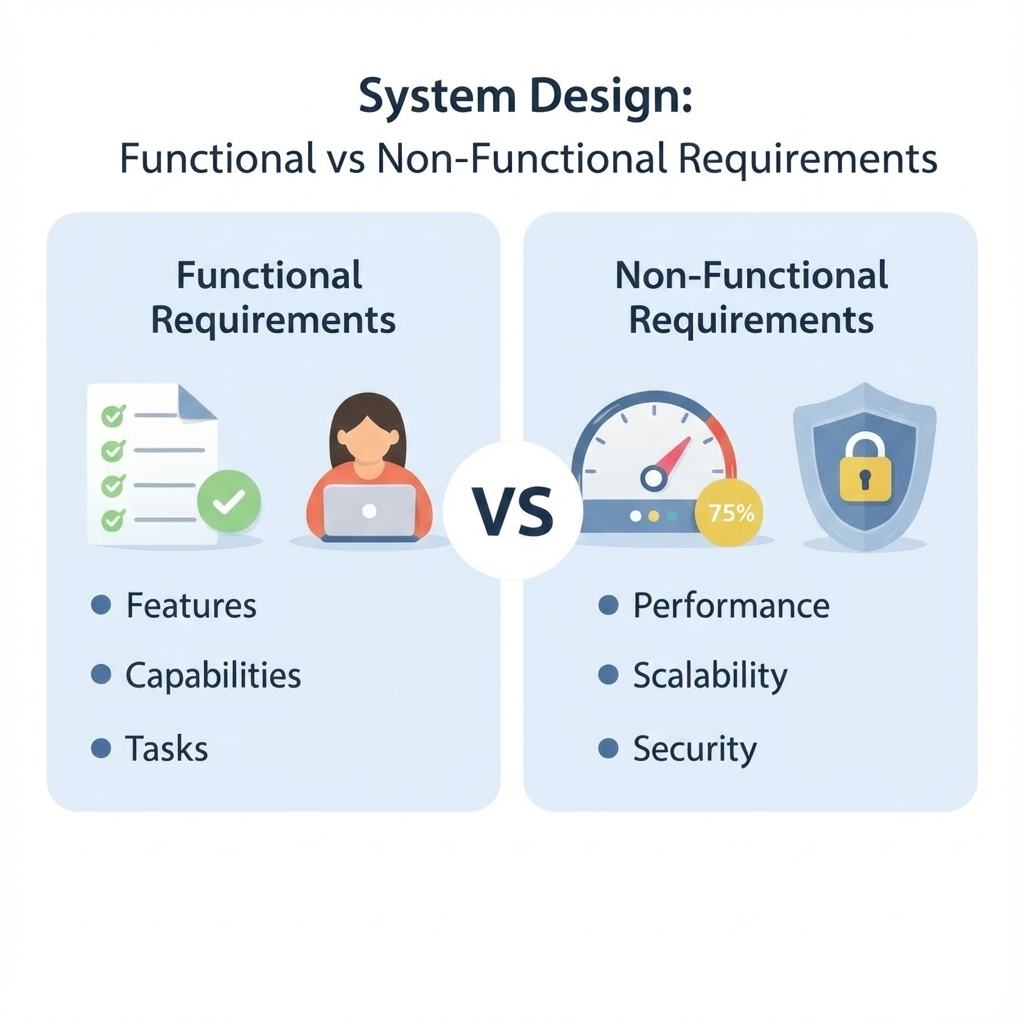
Functional vs Non-Functional Requirements

Every good system design starts with requirements.Before choosing databases, caches, or architectures, you must clearly understand what the system should do and how well it should do it. These two dimensions are known as functional requirements and non-functional requirements. Many system design failures — and interview failures — happen because engineers misunderstand or ignore this

Functional vs Non-Functional Requirements Read More »