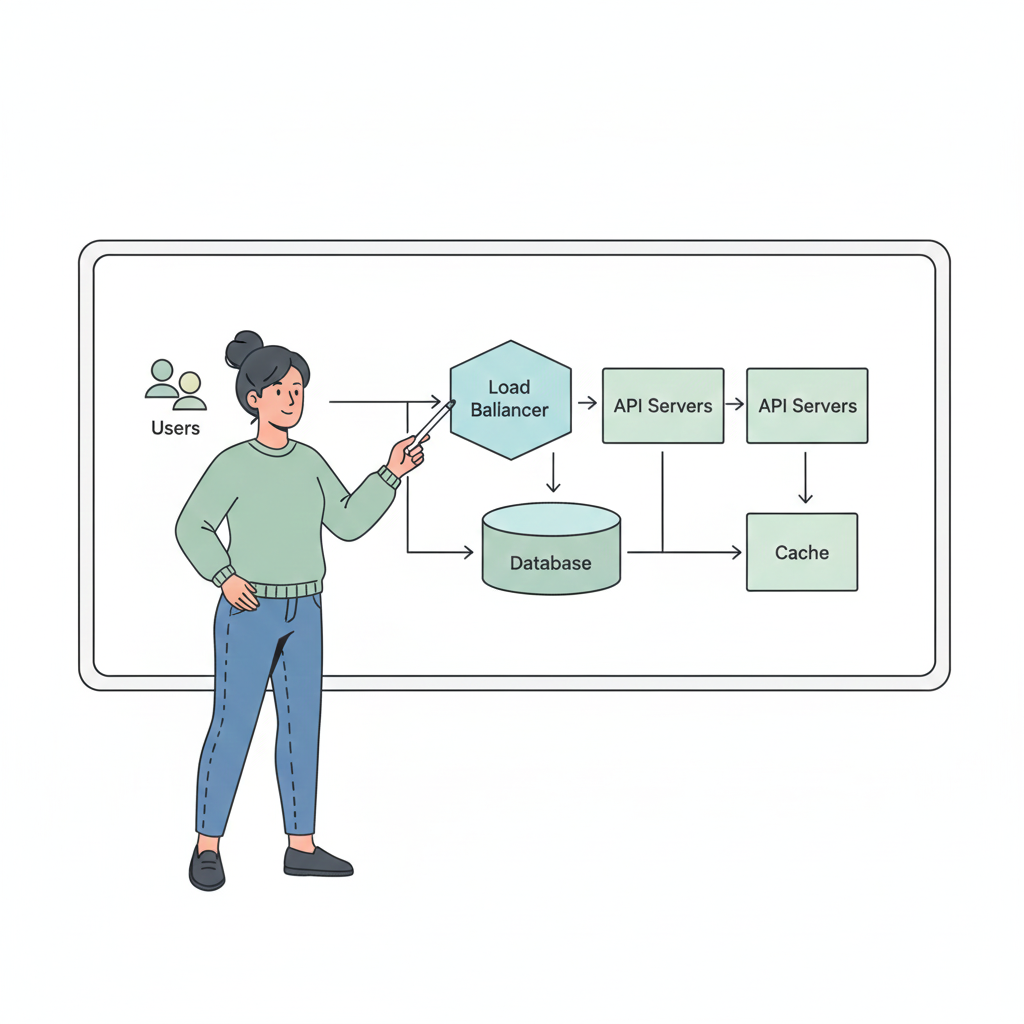
In distributed systems, multiple services run independently and communicate over unreliable networks.
Coordinating actions across these services is challenging but essential for correctness and consistency.
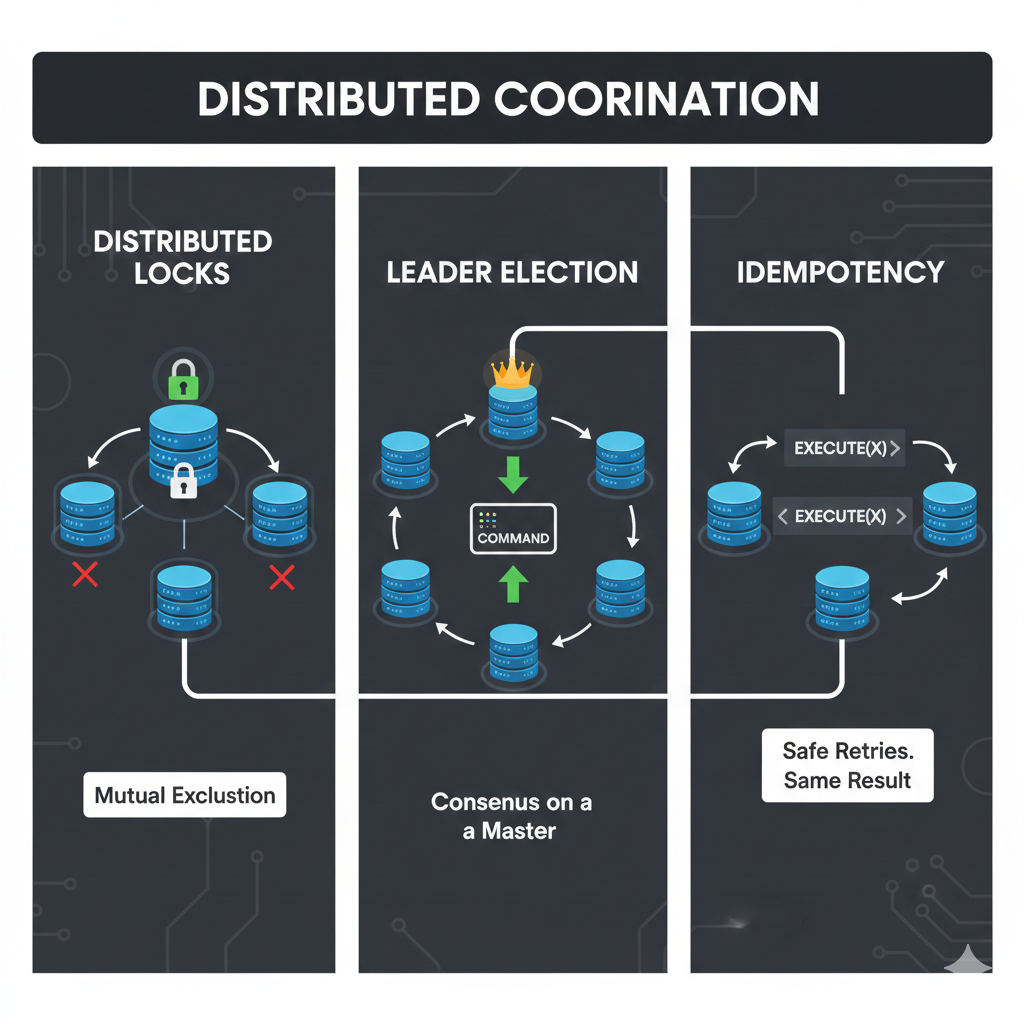
In this blog, we’ll explore distributed locks, leader election, and idempotency—three foundational coordination concepts.
Why Coordination Is Hard
Distributed systems face:
- Network delays and partitions
- Partial failures
- Multiple nodes acting concurrently
Without coordination, systems may:
- Perform the same task multiple times
- Corrupt shared data
- Create inconsistent states
Distributed Locks
A distributed lock ensures that only one node performs a critical operation at a time.
Common Use Cases:
- Running scheduled jobs (cron tasks)
- Updating shared resources
- Preventing duplicate processing
How Distributed Locks Work
Locks are usually managed by external systems like:
- Redis
- Zookeeper
- etcd
A node acquires the lock before executing and releases it afterward.
Pitfalls of Distributed Locks
- Lock expiry issues
- Deadlocks if locks aren’t released
- Network failures causing split-brain scenarios
Locks should be used carefully and sparingly.
Leader Election
Leader election selects one node as the leader responsible for coordination tasks.
Why Leaders Are Needed:
- Managing cluster state
- Coordinating writes
- Scheduling background jobs
Common Approaches:
- Consensus-based systems (Zookeeper, etcd)
- Heartbeats and timeouts
If the leader fails, a new leader is elected automatically.
Idempotency
Idempotency means performing an operation multiple times has the same effect as performing it once.
Why Idempotency Matters
In distributed systems:
- Messages may be delivered more than once
- Requests may be retried due to failures
Without idempotency, retries can cause duplicate actions.
Idempotency Example
Payment Processing:
- Client sends a payment request
- Network times out
- Client retries request
Using a unique transaction ID ensures payment is processed only once.
Locks vs Idempotency
- Locks prevent concurrent execution
- Idempotency handles duplicate execution
In many systems, idempotency is preferred over locks due to better scalability.
Best Practices
- Avoid global locks where possible
- Design APIs to be idempotent
- Use leader election for coordination-heavy tasks
- Handle retries and failures explicitly
Key Takeaways
- Coordination is essential in distributed systems
- Distributed locks control concurrent access
- Leader election provides a single coordinator
- Idempotency ensures safety during retries
These concepts are critical for building reliable and scalable distributed systems.